
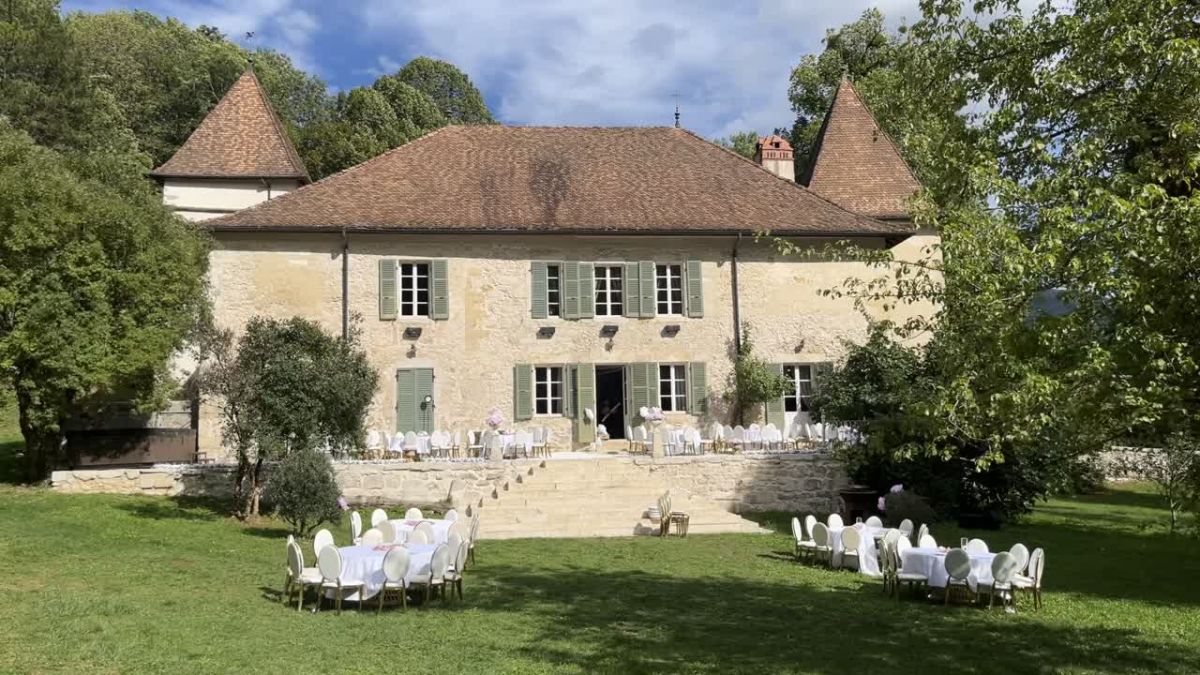
Châteaux in France: who the foreign buyers are and how the market is evolving in 2026
Around 400 châteaux change hands in France every year, twice as many as in 2019. Americans, Swiss, Belgians and British are among the most active buyers. Verified figures, prices, sought-after regions and the legal points to know.
Once reserved for a handful of insiders, the French château market is attracting an increasingly visible international clientele. How significant are foreign buyers, what are they looking for, and which rules apply to them? Here is an overview based on published, verifiable data.
A niche market that has doubled in five years
According to Barnes Propriétés & Châteaux, the number of château sales in France rose from about 200 in 2019 to nearly 400 a year, with around 1,500 historic properties on the market. Kretz Real Estate confirmed these figures in September 2026, during the European Heritage Days.
Supply is therefore almost four times the annual sales volume. The market remains narrow and slow: according to Kretz, selling a château takes 18 to 24 months on average. The timeframe depends on location, the quality of the property and the extent of the work required.
What share do foreign buyers represent?
There is no official public statistic that isolates château purchases by foreigners, as Barnes Propriétés & Châteaux itself points out. The available figures come from specialist agencies and reflect their own client base:
- Barnes Propriétés & Châteaux (2025): about 50% of its château buyers are foreign, with a strong return of American clients.
- Junot (2026): 27% foreign clients, three quarters of whom come from the European Union.
These differences reflect each agency's positioning and network. One conclusion is shared, however: foreign buyers account for a significant and structural share of this market.
The most active nationalities
At Kretz Real Estate, Americans, Swiss, Belgians and British are among the main buyer nationalities. Junot cites the same nationalities and adds Chinese buyers. For these clients, French heritage, backed by a stable legal framework, carries a prestige of its own.
Different expectations from French buyers
According to Barnes, French buyers mainly look for a second home close to where they live, for weekends and holidays. They generally target châteaux of up to 700 m², often around Paris. Foreign buyers prefer larger residences, in the range of 1,000 to 1,500 m².
Selection criteria vary from project to project, according to Kretz:
- proximity to Paris;
- access to major roads and an airport, often decisive for international buyers;
- landscapes and architectural heritage;
- vineyards or hunting grounds.
Barnes also notes the rise of more entrepreneurial profiles who turn the château into a business: weddings, corporate seminars, bed and breakfast.
Sought-after regions
The foreign buyers followed by Kretz search across varied areas: Normandy, Burgundy, the Dordogne, Provence, Central and Western France. According to Junot, most of the châteaux on the market are concentrated in the Dordogne, Pays de la Loire, Auvergne-Rhône-Alpes, Bourgogne-Franche-Comté and Centre-Val de Loire. Île-de-France remains the most selective and most expensive market.
What budget should you plan for?
Prices cover a very wide range:
- Barnes: from around €400,000 for a château in need of restoration to more than €10 million for a renovated residence.
- Kretz Real Estate: properties listed between €920,000 and €20 million, with an average achieved sale price of €2.415 million.
Living space alone does not determine a château's value. Land, outbuildings, condition and potential uses matter just as much. Renovation costs can also be considerable: Barnes points out that some châteaux have not been renovated for several generations. It also notes that France's energy performance certificate (DPE) is often poorly suited to old buildings.
What a foreign buyer should know before signing
No nationality requirement
French law places no restriction on property purchases by foreigners, whether or not they live in France. The sale must be signed as an authenticated deed before a French notary.
French law governs the property
According to the French notaries' association, the law of the place where the property is located applies to a real estate purchase. French law therefore governs ownership, the conditions of purchase and the tax treatment of any resale. In the event of death, however, the applicable succession law is not necessarily French law, so advice beforehand is essential. Notaries are also required to check the origin of funds as part of anti-money-laundering rules.
Real estate wealth tax (IFI)
Individuals domiciled outside France are liable for IFI only on their real estate located in France, when its net value exceeds €1.3 million (BOFiP, the official French tax guidance). At these price levels, many château buyers fall within its scope. Bilateral tax treaties may change the situation depending on the country of residence.
Listed historic monuments
As of 31 December 2023, France had 45,080 buildings protected as historic monuments: 14,317 "classés" and 30,763 "inscrits". About half are owned by public bodies. Private owners are responsible for conserving their monument. In return, they may receive grants: the regional cultural affairs departments (DRAC) devote nearly €35 million a year to them. Specific tax schemes come on top, often linked to opening the property to the public. Buying a protected château therefore also means committing to a long-term heritage project.
In summary
The château market remains a niche: around 400 sales a year for 1,500 properties listed, with long selling times. Foreign buyers, led by Americans, Swiss, Belgians and British, are a key driver. They stand out for seeking large surfaces and good international access. France's legal framework is open, but tax, inheritance law and any heritage protection should be reviewed with a notary and a tax adviser before making any commitment.
Sources
- MySweetImmo / Kretz Real Estate (17/09/2026, in French)
- MySweetImmo – Interview with Olivier Brunet, Barnes (23/09/2025, in French)
- La Gazette France (25/09/2025, in French)
- Junot – Buying a château in 2026 (in French)
- Barnes Propriétés & Châteaux – Foreigners and French châteaux (in French)
- Notaires de France – Property purchase by a non-resident (in French)
- BOFiP – IFI for individuals domiciled outside France (in French)
- French Ministry of Culture – Historic monument protection (in French)
This article is for information purposes only and does not constitute legal or tax advice.
FAQ
Frequently asked questions
Who writes the Journal articles?
Articles are written by MANGOLD REAL ESTATE experts, including Yves Mangold and Alexandre Emmelin, based on their daily practice of prestige real estate in Alsace, Grand Est and France.
Does this information replace personalised advice?
No. Our articles are informative; every project (purchase, sale, inheritance, investment) deserves a personalised analysis. Contact us for a confidential appointment.
How can I find out the value of my prestige property?
Request a confidential valuation: an expert analyses the local market, visits your property and provides a reasoned valuation. It is free as part of a sale project.
How can I receive future market analyses?
Subscribe to our newsletter from the home page: you will receive our luxury market analyses and a selection of exceptional properties.
Which areas do your analyses cover?
Strasbourg and its metropolitan area, Colmar, Mulhouse, the wine route, Grand Est (Metz, Nancy, Reims) and the national market for châteaux, exceptional estates and prestige villas.